
Hotline:15086707142
 3 / 3
3 / 3
图片三 |
Your position: Home > News > News Information
Spectral detection technology |
| Publisher:Jinghong (Jiangsu) Spectrum Co.,Ltd. Release time:2025-01-13 16:23:05 Click count:51 Close |
| Near infrared spectroscopy analysis technology is a powerful real-time continuous detection tool widely used in various continuous detection scenarios, especially in biological fermentation processes. The following are the application scenarios and advantages of near-infrared spectroscopy analysis technology in continuous detection. 1. Real time monitoring and control Real time monitoring of key parameters during biological fermentation is of great significance for optimizing the fermentation process and controlling product quality. Near infrared spectroscopy detection equipment can monitor key parameters in fermentation broth in real time, such as substrate concentration, product concentration, cell density, etc. By analyzing the near-infrared spectral information in the fermentation broth, the changes in key parameters during the fermentation process can be quickly obtained, providing real-time data support for the optimization of the fermentation process, helping operators adjust fermentation conditions in a timely manner, and ensuring that the fermentation process is carried out in the optimal state. Taking product concentration as an example, product concentration is one of the important parameters in the biological fermentation process. Near infrared spectroscopy detection equipment can quickly determine product concentration by analyzing near-infrared spectral information in fermentation broth. Compared with traditional methods for determining product concentration, near-infrared spectroscopy detection equipment has the advantages of fast analysis speed, high detection sensitivity, and easy operation. 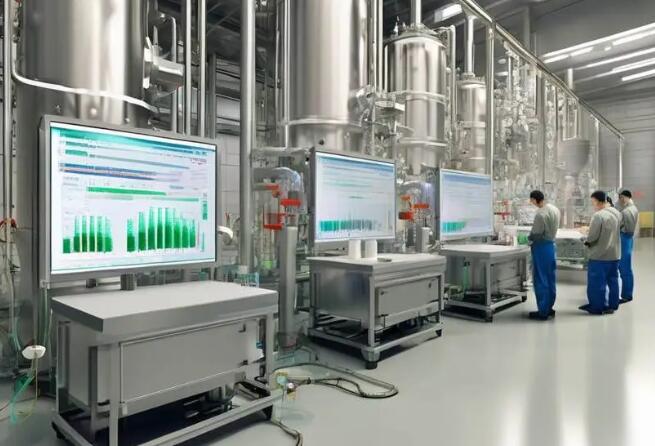
Near infrared spectroscopy analysis technology can detect key components in the biological fermentation process online, such as cell density, substrate concentration, and product concentration. By monitoring these parameters in real-time, the status of the fermentation process can be understood in a timely manner and optimized. For example, by adjusting the substrate supply rate or optimizing fermentation conditions, product concentration and yield can be increased. 3. Product quality control and assurance Near infrared spectroscopy analysis technology can also be used for product quality control and assurance in biological fermentation processes. By monitoring the concentration and purity of the product in real-time, it can be ensured that the product quality meets the standard requirements. If abnormal situations are detected, timely measures can be taken to adjust and avoid producing unqualified products. 4. Reduce costs and improve efficiency The application of near-infrared spectroscopy analysis technology can reduce costs and improve efficiency in biological fermentation processes. By monitoring and optimizing the fermentation process in real-time, energy consumption and raw material waste can be reduced. Meanwhile, near-infrared spectroscopy analysis technology can quickly provide accurate data, reduce the need for manual operation and laboratory testing, and improve production efficiency. 5. Reliability and stability The application of near-infrared spectroscopy analysis technology in continuous detection has high reliability and stability. The near-infrared spectroscopy instrument has been specially designed to work in harsh production environments and has the characteristics of strong anti-interference ability and fast response speed. This means that accurate and reproducible data can be obtained during the continuous detection process. 6. Safety and Environmental Protection The application of near-infrared spectroscopy analysis technology in continuous detection also meets the requirements of safety and environmental protection. Due to the non-invasive nature of near-infrared spectroscopy analysis technology, it does not require destructive treatment of samples, thus avoiding contamination of the environment and samples. Meanwhile, near-infrared spectroscopy analysis technology does not use harmful chemicals and meets environmental standards. The application of near-infrared spectroscopy analysis technology in continuous detection provides powerful support for biological fermentation processes |

Jinghong (Jiangsu) Spectrum Co.,Ltd. TEL:15086707142 E-MALI:SHJH@cl-spectrum.com WEB: www.cl-spectrum.com ADD:Building 33, No. 58 Tonggang Road, Bixi Street, Changshu City, Jiangsu Province Su ICP No. 2026055001-1
 Scan the mobile website
 Cell phone station
